What Makes Drupal a Marketing-Led Enterprise CMS?
Table of Contents
- How Should Marketing Teams Plan a Drupal Project?
- How Does Drupal Turn a Design System into Brand Guardrails?
- How Does Drupal Support Reusable Content?
- How Does Drupal Canvas Help Marketers Build Pages Faster?
- How Does Drupal Support Mobile App Experiences?
- How Does Drupal Connect with Marketing, CRM, and Analytics Tools?
- When Should Enterprise Marketing Teams Choose Drupal?

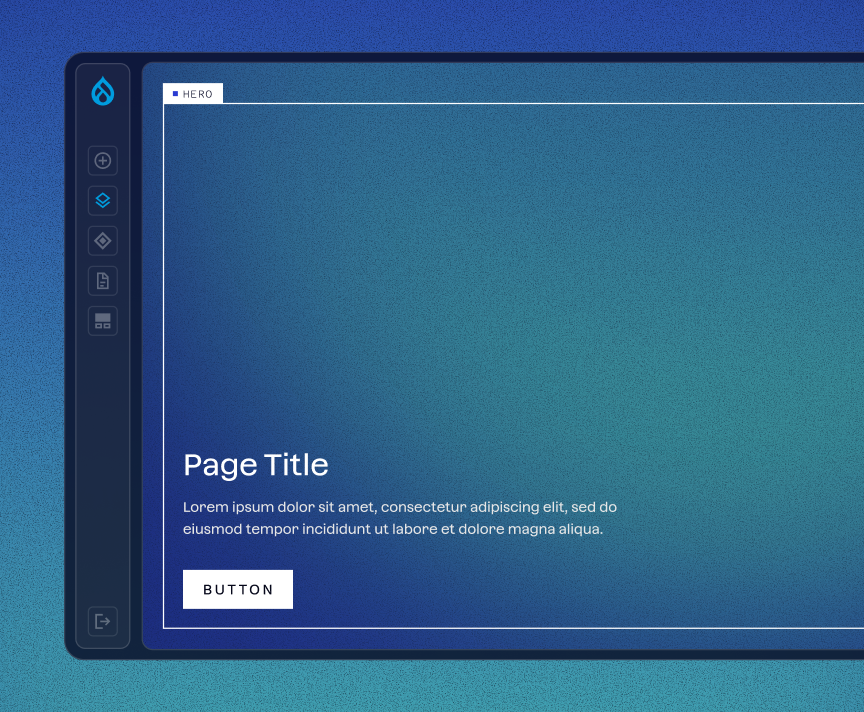
Drupal is a marketing-led enterprise CMS gives marketing teams controlled independence to create pages, reuse content, manage campaigns, and coordinate customer experiences while design and technology teams maintain governance, security, and brand consistency.
Most enterprise websites are built to launch, not to evolve. Marketing teams inherit rigid templates, disconnected tools, inconsistent pages, and publishing processes that require developer support for routine changes. The website remains online, but it cannot keep pace with campaigns, markets, products, or changing customer expectations.
Drupal transforms a static website into an adaptable digital platform that powers consistent brand touchpoints. It gives marketing teams a shared foundation for managing structured content, approved components, landing pages, workflows, multiple languages, integrations, and content delivery across websites and mobile apps.
Its structured content model and APIs allow information to be reused across channels, supporting a scalable digital footprint. Drupal also strengthens technical SEO through URL, metadata, schema, and content-relationship controls. Its growing AI capabilities can support content generation, tagging, personalization, and recommendations, helping teams scale output without losing quality or relevance.
For marketing teams, Drupal CMS delivers this value proposition in practice:
- Faster campaign and landing-page creation.
- Stronger brand control across teams and markets.
- Reusable content instead of repeated production.
- Clear publishing roles and approval processes.
- Integration with CRM, analytics, DAM, and marketing tools.
- Built-in technical SEO capabilities for improved search performance.
- AI-assisted content creation, optimization, and personalization.
- Less reliance on developers for everyday execution.
Drupal gives marketers the control to operate confidently while preserving the governance, scalability, and technical flexibility an enterprise requires. It turns the website from a collection of pages into the operating platform behind the brand.
Ready to turn your static website into an AI-ready Drupal platform?
Back to top
How Should Marketing Teams Plan a Drupal Project?
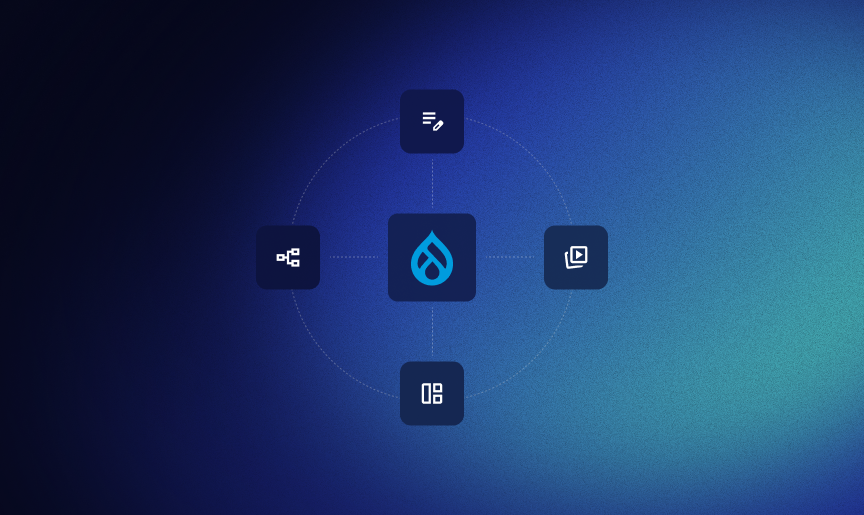
A Drupal project should begin by defining how the brand will operate after launch. The objective is not to reproduce a Figma design inside a CMS. It is to convert the design into a reusable system that works consistently across websites, landing pages, portals, and mobile applications.
The planning process should define:
- Figma-to-Drupal implementation: Map design tokens, layouts, and interface patterns to approved Drupal components and variants.
- Content architecture: Define content types, fields, taxonomy, and relationships for products, services, campaigns, insights, and locations.
- Page-building control: Decide which components marketers can combine, edit, or reorder without weakening the brand.
- Mobile app delivery: Identify which content, media, navigation, and campaign information should be shared with mobile apps through Drupal APIs.
- SEO requirements: Define URL structures, metadata, schema markup, redirects, internal links, sitemaps, and multilingual SEO rules.
- Marketing integrations: Specify connections with CRM, marketing automation, analytics, consent management, DAM, and search tools.
- Publishing governance: Establish roles, approvals, permissions, localization processes, and content ownership.
- Performance measurement: Define campaign, content, conversion, search, mobile engagement, and platform-adoption metrics.
These decisions turn design files and marketing requirements into a practical Drupal operating model. Marketing teams gain controlled independence, while design and technology teams retain the standards needed to protect the brand across every digital touchpoint.
Back to topHow Does Drupal Turn a Design System into Brand Guardrails?

A design system only protects the brand when its rules are built into the CMS. Figma defines the visual direction; Drupal turns it into reusable page templates and components that marketing teams can use consistently.
The implementation should translate:
- Color palette: Apply approved brand colors across backgrounds, text, buttons, and interface elements.
- Typography system and scale: Control fonts, heading levels, body text, labels, and spacing.
- Component variations: Provide approved versions of banners, cards, forms, accordions, and calls to action.
- Media types: Set clear rules for images, videos, icons, documents, sizes, and aspect ratios.
- Page templates: Create repeatable structures for landing pages, campaigns, services, articles, and other common page types.
- Content limits: Control text length, required fields, image dimensions, and available layout options.
Developers build and test these rules once. Marketing teams then use approved templates and component variations to create new pages without starting from scratch.
This gives marketers the freedom to publish faster while keeping the brand, responsive behavior, accessibility, and user experience consistent across the website.
Back to topHow Does Drupal Support Reusable Content?

Enterprise content is often copied across landing pages, product pages, mobile apps, and regional websites. This creates duplicated work, outdated information, and inconsistent messaging.
Drupal solves this by following a “build once, reuse everywhere” approach, storing content in structured, reusable formats instead of treating every page as a separate document.
Marketing teams can define:
- Hero banners: Reuse approved campaign messages, images, and calls to action.
- Content cards: Display services, products, articles, locations, or related content in consistent formats.
- Promotional blocks: Publish the same offer or announcement across several pages and markets.
- Calls to action: Maintain consistent wording, links, and design across campaigns.
- Forms: Reuse lead-generation, registration, contact, and newsletter forms.
- Media blocks: Manage approved images, videos, documents, and icons from a shared library.
- Component variations: Adapt the same component for different layouts without rebuilding it.
- Global content blocks: Update shared content once and reflect the change everywhere it appears.
Drupal can also deliver these components and content blocks to mobile apps and other channels through APIs.
This gives marketing teams a faster and more controlled way to build experiences. Content remains accurate, components stay consistent, and teams avoid recreating the same material for every page or channel.
Back to topHow Does Drupal Canvas Help Marketers Build Pages Faster?

Marketing teams lose time when every landing page requires a developer to arrange sections, adjust layouts, or preview changes. Drupal Canvas replaces this process with visual page building inside Drupal.
Marketers can drag approved components onto a page, edit content in place, and preview the result as they work. This makes it easier to create:
- Campaign landing pages
- Product and service pages
- Event and registration pages
- Promotional sections
- Regional page variations
- Reusable page templates
Drupal Canvas does not remove the design system established earlier in the project. Teams work with approved banners, cards, forms, media blocks, calls to action, and component variations. This allows marketers to move quickly without changing the color palette, typography system, responsive design, or brand standards.
Canvas reduces developer dependency for routine page creation and layout changes. Developers remain responsible for building new components, complex functionality, and integrations, while marketers gain direct control over everyday publishing. Drupal Canvas therefore turns page creation into a marketing workflow rather than a recurring development request.
Back to topHow Does Drupal Support Mobile App Experiences?

Managing website and mobile app content separately creates duplicated work, fragmented customer journeys, and inconsistent brand experiences. Drupal can operate as the shared content and experience layer connecting both channels.
Marketing teams can use Drupal to support:
- Connected customer journeys: Move users from website discovery to mobile app registration, service use, or conversion without breaking the experience.
- Unified campaign execution: Launch the same campaign across websites and mobile apps while adapting the message, format, and call to action for each touchpoint.
- Consistent brand experiences: Apply the same content standards, tone of voice, media, and approved messaging across every digital channel.
- Personalized interactions: Deliver relevant content based on audience segments, customer profiles, location, behavior, or stage in the journey.
- Coordinated measurement: Connect website and mobile app interactions with analytics and customer data to understand the full journey rather than isolated channel performance.
The mobile application is still designed and developed separately, but Drupal supplies the structured content and connects it with the wider customer experience.
This allows Drupal to orchestrate the journey from website to mobile app while maintaining one brand, one content foundation, and one consistent experience across touchpoints.
Back to topHow Does Drupal Connect with Marketing, CRM, and Analytics Tools?
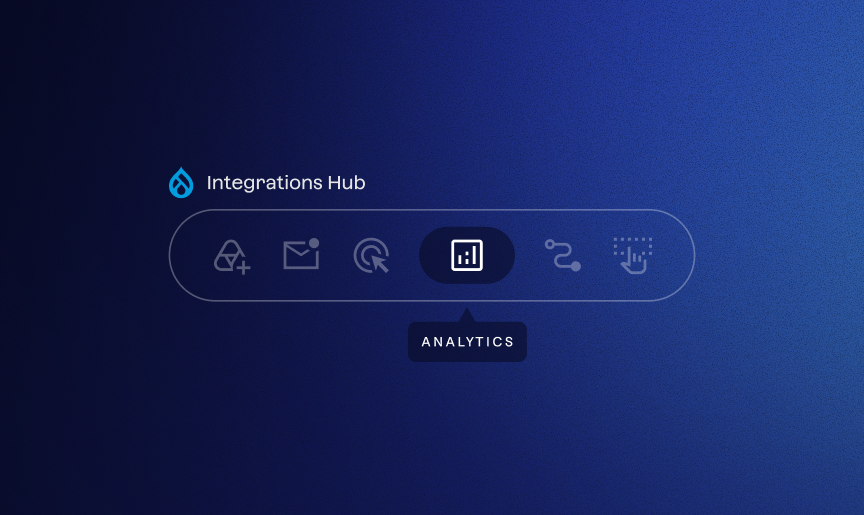
A CMS cannot lead enterprise marketing if it operates as an isolated publishing tool. Drupal connects content with the systems that capture leads, manage customer relationships, automate campaigns, and measure performance.
Its API-first architecture allows integrations through existing modules, web services, or custom connections when enterprise requirements are more complex.
Marketing teams can use these integrations to create:
- Connected lead journeys: Send form submissions, campaign sources, and user interests directly to the CRM.
- Marketing automation: Trigger emails, lead-nurturing flows, audience lists, and follow-up actions based on website interactions.
- Unified campaign tracking: Connect Drupal with analytics and tag-management tools to measure traffic, engagement, conversions, and content performance.
- Personalized experiences: Use CRM or customer-data signals to deliver more relevant messages, offers, and calls to action.
- Consent-aware marketing: Coordinate tracking and campaign activity with the organization’s consent-management requirements.
Drupal supports REST APIs and can connect with analytics and marketing platforms through its broader module ecosystem.
The result is not simply a connected website. Drupal becomes the content layer that helps coordinate the customer journey across campaigns, CRM activity, analytics, mobile apps, and other brand touchpoints.
Back to topWhen Should Enterprise Marketing Teams Choose Drupal?

Drupal is the strongest fit when the website must operate as more than a publishing channel. It is built for organizations that need one platform to manage brand consistency, reusable content, campaign execution, mobile app experiences, and enterprise integrations.
Marketing teams should choose Drupal when they need:
- A design system enforced through approved templates and components.
- Freedom to build landing pages without relying on developers for every change.
- Structured content that can be reused across websites, apps, and other touchpoints.
- Strong workflows, permissions, and governance across multiple teams.
- Multilingual and multi-site management from a shared platform.
- Connections with CRM, marketing automation, analytics, DAM, and consent tools.
- Long-term flexibility without being restricted by a closed website builder.
Drupal may be excessive for a small website with limited content, few integrations, and infrequent updates. It also requires proper implementation, governance, and technical support; installing Drupal alone will not create marketing autonomy.
For enterprise brands, however, Drupal provides the foundation marketing teams need to turn a static website into a scalable digital platform. It gives marketers more control without sacrificing the structure, security, and consistency required to protect the brand as it grows.